
Humach

Feedback to Action

An AI voice agent that collects customer feedback by phone, and turns thousands of calls into one report per location.

Year
2026
Time to build
2 months
What we did
Voice agent, Web app, Reporting, Infrastructure
Built with
TanStack, Postgres, LangGraph, voice agent, AWS
A small QR card standing on the worn wooden counter of a coffee shop in late afternoon light, a customer waiting out of focus behind it.

The problem

Surveys get answered by the people least representative of your customers, and the answers arrive as numbers with no reason attached. A phone call gets the reason. A phone call also does not scale, and that has always been the end of the argument.
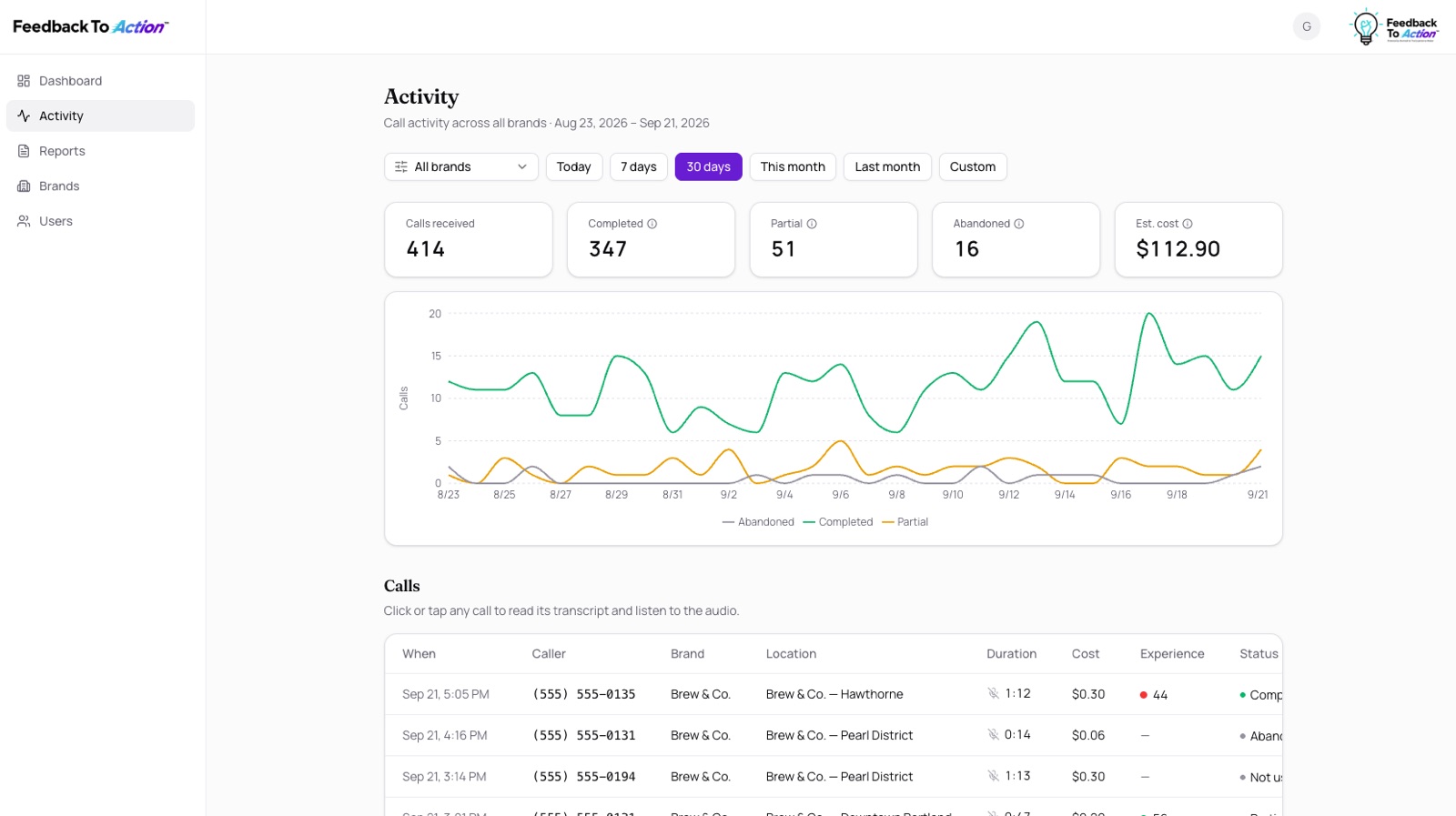
The activity screen: 414 calls received, 347 completed, 51 partial, 16 abandoned, $112.90 estimated cost, a thirty-day chart, and a table of individual calls with duration, cost and experience score.
Four hundred and fourteen calls in thirty days, for a hundred and twelve dollars. That is the number the old argument breaks on.

How it reaches people

Every brand gets an agent with its own greeting and closing, and every location gets its own number and its own QR code for the counter, the receipt or the door. A customer rings, or scans, and talks for about a minute. The agent asks, listens, and follows up when an answer is too thin to act on.
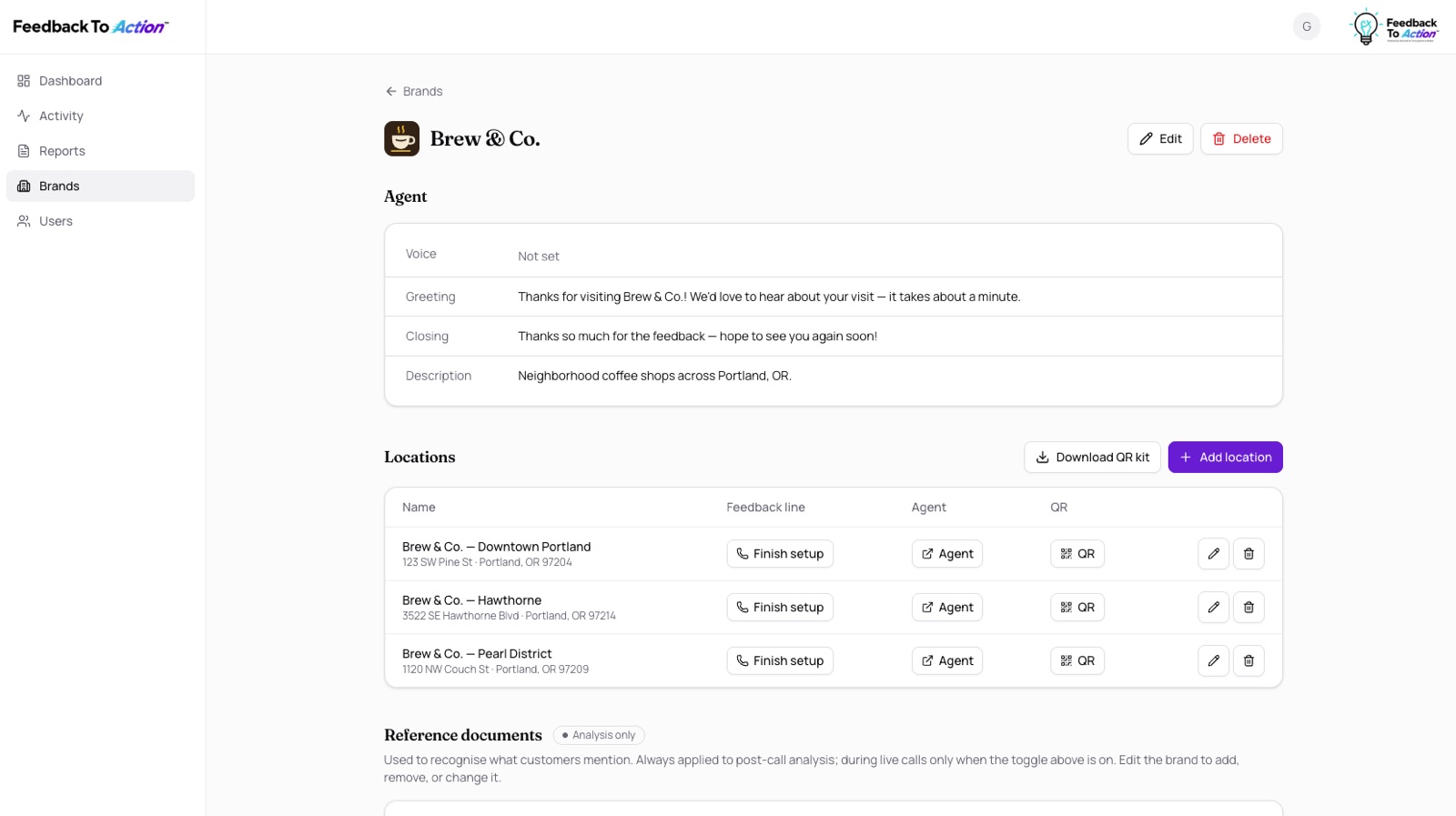
A brand’s setup: the agent’s greeting and closing, and three locations each with its own feedback line, agent link and QR code.
One agent per brand, one line and one QR code per location. The greeting is the brand’s own words, not ours.

One page per location

A brand with three shops is really three businesses, and the average across them hides which one has a problem. Each location carries its own score and its own line on the chart, so a branch sliding away from the others is visible before anyone complains about it.
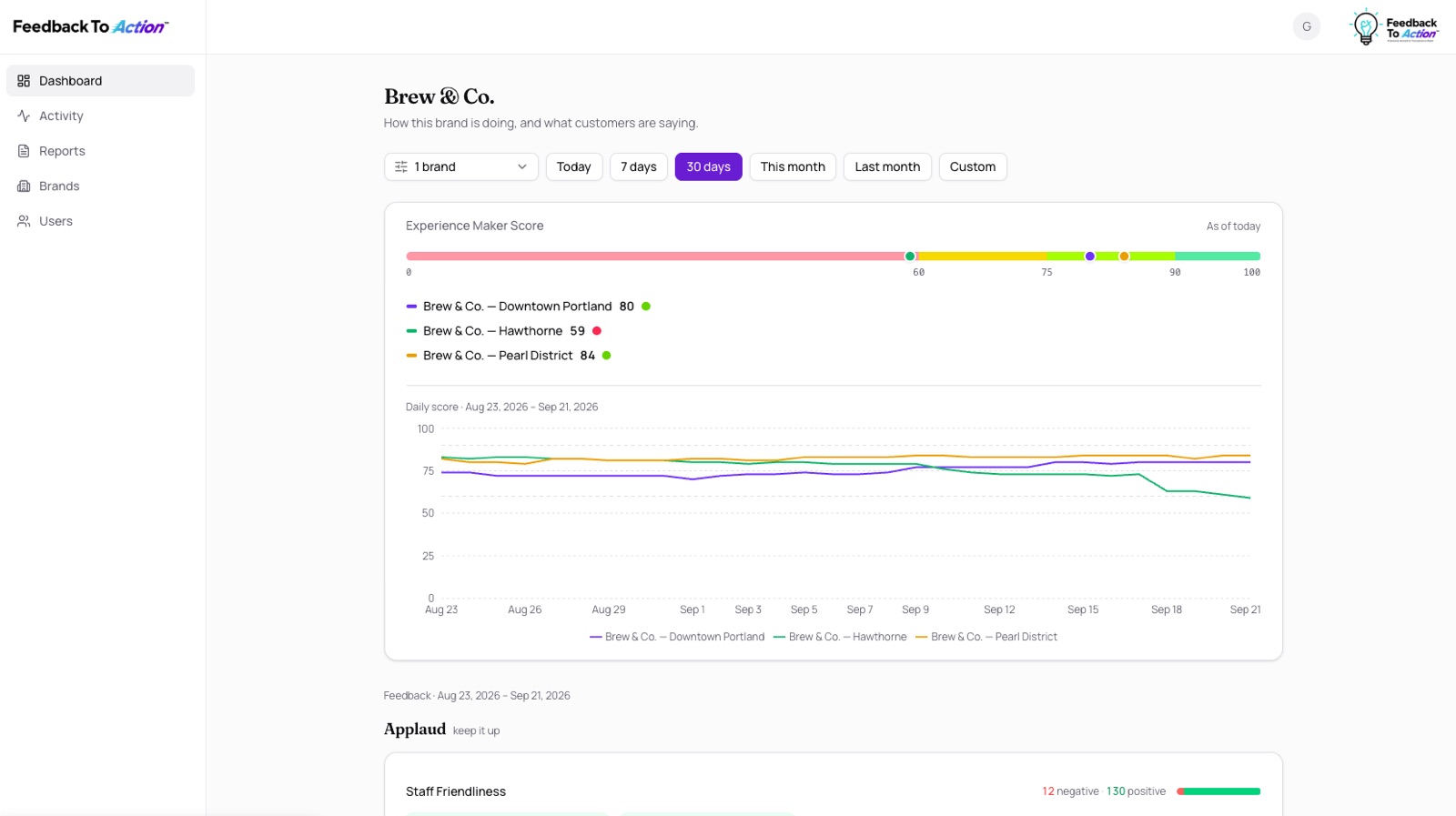
Three locations of the same brand scored separately — 80, 59 and 84 — with a daily score line for each over thirty days.
Three shops, three scores. Hawthorne has been drifting down for two weeks while the other two hold; averaged together, none of that is visible.

What to fix, in their words

Every call is read on its own, then the themes are counted across all of them and split into what to keep doing and what to fix. Each theme carries the customers’ own phrasing rather than a summary of it, and opens back to the calls it came from, so a claim about a branch is never something you have to take on trust.
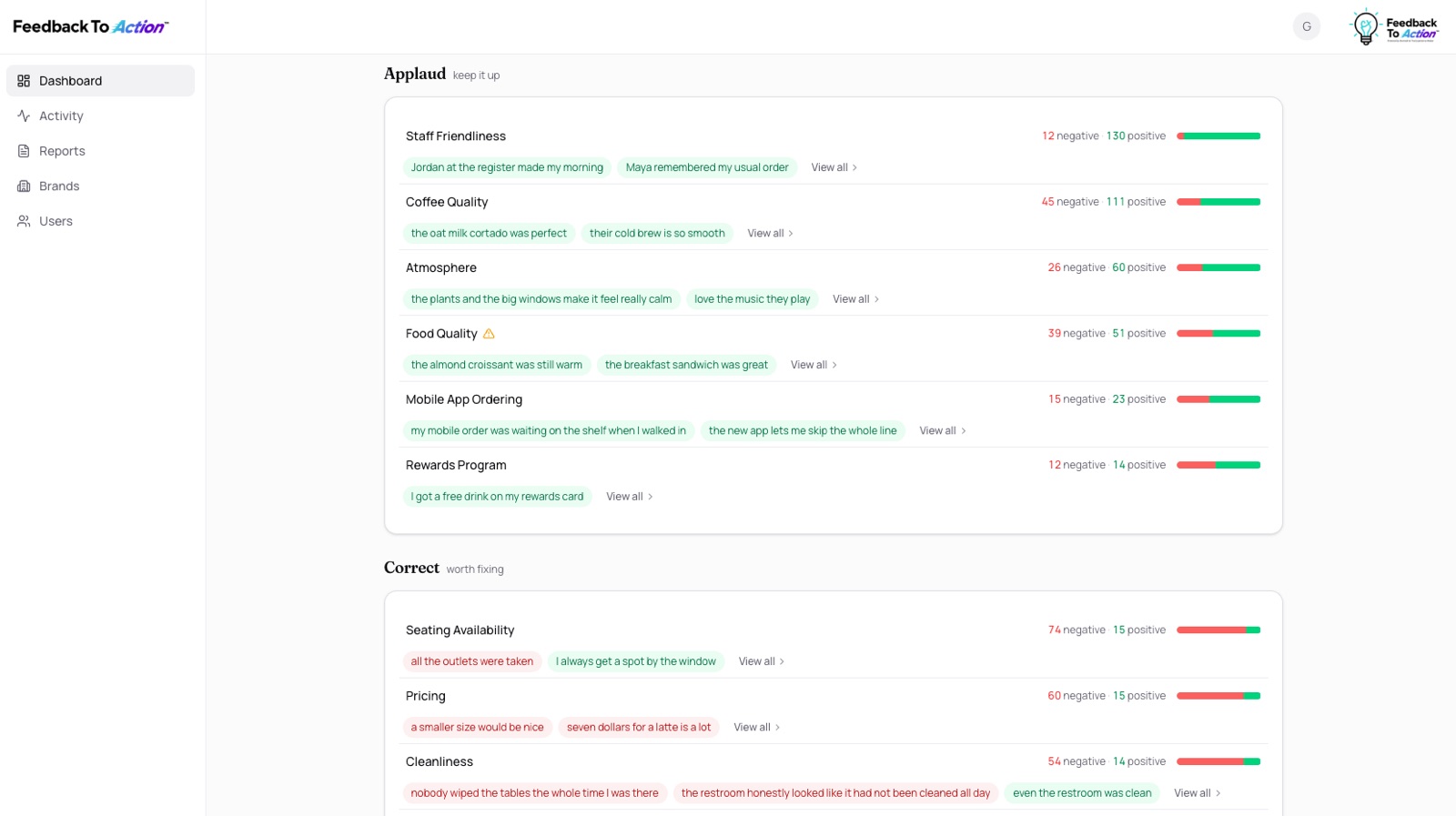
Themes split into Applaud and Correct, each with a count of positive and negative mentions, a bar, and quotes taken from the calls.
Not a sentiment score. Seating availability, 74 mentions against 15 for, with the sentence a customer actually said attached to it.

More work

Want something like this built?

Start a project